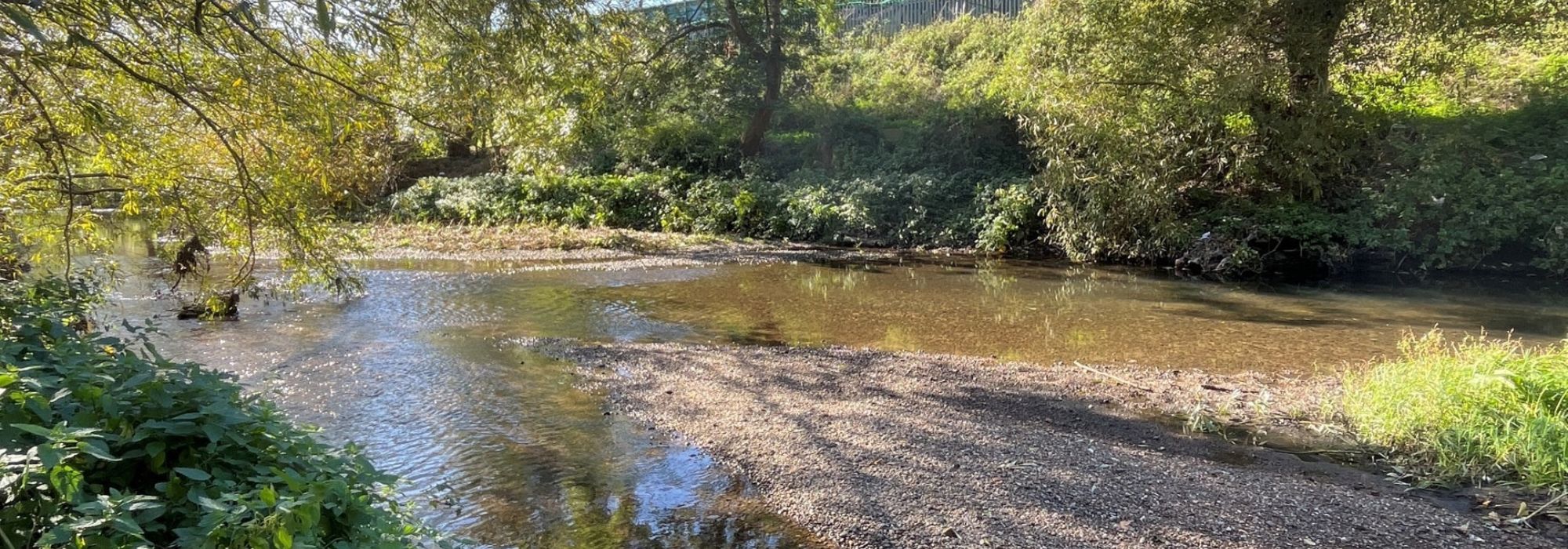
Bringing the River Brent back to life
The Ealing Water Vole Project: a river, a community and a small mammal with a big comeback to make, at the heart of the West London Regional Park.
The story so far
Picture the River Brent as it might have looked in the past, before urban development and changes to the river altered its natural character: shaded in places, sunlit in others, its banks thick with reeds and iris, its water running fast over gravel, and slow and deep in quiet pools. Now, picture a water vole – the animal Ratty is based on in ‘The Wind in the Willows’ book – swimming from its burrow to feed on the bankside plants.
That river is not the Brent we have today. Water voles have vanished from most of London’s rivers, and the Brent has been straightened, over-widened and lined with ageing timber boards that hold the banks in place and stop plants from growing. There are no water voles on this stretch now.
Over the next two years, we are going to change that. Together with local people, we will restore habitat along around 12 km of the River Brent through Ealing. The project is an important part of the West London Regional Park, helping create a connected network of healthier rivers, parks and green spaces for wildlife and people.
Our aims
- Create a living river. Give the Brent a varied, natural channel again, with pools, shallows and fast flows, so fish, insects, birds and mammals have somewhere to live.
- Rebuild the banks. Replace bare, boarded edges with thick marginal vegetation that offers food, cover and safe places to burrow.
- Prepare for water voles. Create conditions that could support the future reintroduction of water voles to the Brent corridor.
- Open up the river. Let in more light along the channel, creating a patchwork of sun and shade.
- Tackle invasive plants. Clear Himalayan balsam so native plants can reclaim the riverside.
- Bring people with us. Put local people at the heart of the work, giving them the skills, knowledge and pride to look after their river.
- Prove it works. Survey and monitor the river before and after, so we can show what changed and help other rivers follow.
What will happen on the river
Freeing the banks. Old, damaged wooden boards along the riverbank will be removed, allowing the river to flow more naturally and plants to grow along its edges. Failing timber toe boards will be removed, letting the river meet its banks and plants take root.
Wood that works. Large wood deflectors will be fixed into the channel to steer the flow, scouring pools and building gravel riffles.
Brushwood berms. We will build berms from woven brushwood along the edges, narrowing the channel and creating new planting ground.
Planting. Native species such as common reed, yellow flag iris, purple loosestrife, branched bur-reed and sedges will go in by hand, along with woodland plants and wildflowers on the banks.
Letting in the light. Careful tree works will open up the canopy, and the wood will go straight into the new habitat.
Learning as we go. Volunteers will be trained to survey habitat and watch for wildlife, building a clear picture of the river’s recovery.
Be part of it
This river will be rebuilt by hand, and you can be one of the hands. We are planning volunteer events, where you can help install deflectors, build berms and plant the new riverbank. You don’t need experience, only a willingness to get a little muddy. We’ll provide the training, the tools and the team.
There will also be talks, workshops, school sessions and habitat surveys, and FestiVOLE, a celebration at Horsenden Farm in September 2027, to mark what we’ve achieved.
Events can be found at https://www.thames21.org.uk/events/
Who is involved
Thames21, Citizen Zoo, Ealing Wildlife Group, Ealing Council and the Ealing Rangers, working together with the local community of Ealing. With thanks to Nature Towns and Cities, the Mayor of London and Thames Water for supporting the project. Together, this partnership is delivering an important part of the West London Regional Park vision: connecting people and wildlife through a growing network of green and blue spaces.
Timeline
- Autumn 2026: surveys, design and permits.
- Winter 2026 to Spring 2027: tree works, toe board removal and river restoration begin.
- Spring 2027: habitat training and supervised water vole survey days.
- Summer 2027: Himalayan balsam removal and the FestiVOLE celebration.
- Winter 2027 to Spring 2028: further restoration works and monitoring.
Dates may change depending on permits, weather and river levels.
