Queensmead Recreation Ground, London Borough of Bromley
PROPOSED RIVER RAVENSBOURNE RESTORATION
Project Update: 26 March 2026
Bromley Council, the Environment Agency and Thames21 are providing a joint update on the proposed River Restoration Project in Queensmead Recreation Ground:
Following the Thames21 email update about their proposed project on 31 January 2026, and after reflection from the Council in its capacity as landowner, we wish to advise that the project will not proceed to the final design and subsequent delivery phase. We would like to extend our sincere thanks to local residents, community groups and stakeholders for their time and constructive engagement throughout the development of this project.
Context of the project
Thames21 and its partners have been exploring opportunities to restore and naturalise the 245-metre stretch of the River Ravensbourne that currently flows through Queensmead Recreation Ground within a concrete channel.
Working collaboratively with a wide range of stakeholders, several options were considered with the intention of enhancing the river corridor while balancing environmental benefits with the recreational and accessibility needs of the park. From the outset, community feedback played a central role in informing the project’s development and shaping the options explored.
The project was supported through funding from the Environment Agency’s Water Environment Improvement Fund, which provides investment for initiatives aimed at improving rivers and their surrounding habitats in response to increasing pressures on local ecosystems and to help improve climate resilience.
Where the project is now
On 17 September 2025, Thames21 hosted a well-attended public consultation event at Queensmead Recreation Ground, drawing more than 200 local residents and park users. The purpose of the event was to seek valuable early input from the community regarding their aspirations for the proposed river restoration project.
During the session, four initial design concepts were showcased, allowing attendees to share their preferences and provide feedback to help shape a future more detailed final design proposal for the river corridor. The Community Input Summary is available to view here. This summarises the public view on the proposed river restoration.
Following the initial public consultation undertaken by Thames21, which explored a range of options with differing levels of intervention within the Recreation Ground, the Council carefully considered views from residents, park users and key stakeholders. Having reviewed the feedback, the Council concluded that it would not be appropriate for the project to progress to final design stage and further consultation at this time.
A key consideration in reaching this decision was the importance of clear and demonstrable local support for any proposal affecting a valued community space. The Council was not satisfied that this level of support had been established for the proposals. Whilst the Council remains committed to supporting initiatives that enhance the park, its biodiversity, including strengthening local ecosystems, it has determined that, based on the feedback received, landowner consent will not be granted for the Queensmead Recreation Ground scheme to move forward to delivery.
Thames21 and the Environment Agency acknowledge the Council’s decision and recognise the considerations that have informed it, while noting that there may still be opportunities to improve the space for the benefit of both the local community and the river. They hope to work collaboratively with all parties again in the future at Queensmead as part of wider efforts on the Ravensbourne catchment by the Catchment Partnership.
We wish to acknowledge the valuable support provided by the Friends of Bromley Town Parks and Gardens throughout the project. Our commitment to working in partnership with community groups, park users, and residents remains strong, and we appreciate the involvement of all those who contributed during the development and consultation stages.
As part of this approach, the Council has reaffirmed its commitment to ongoing collaboration with the Friends of Bromley Town Parks and Gardens. If you are interested in the future of Queensmead Recreation Ground, you are warmly encouraged to join the Friends group and become involved. Further details on Queensmead Recreation Ground can be found on the Council’s website, www.bromley.gov.uk, by searching for Queensmead Recreation Ground.
– Bromley Council, the Environment Agency project team and Thames21
WHY RESTORE THE RAVENSBOURNE?
Climate change is on our doorstep, so we need to bring the River Ravensbourne back to its natural state to make it healthy to withstand potential flooding and protect the areas, homes and businesses that surround it.
There is a growing movement towards natural flood management (NFM) which works with nature to slow the flow of water entering rivers, create natural flood storage and reconnect rivers to their flood plains.
Reduce Flood Risk and Improve Climate Resilience
Implementing restoration measures such as floodplain reconnection, bank reprofiling, and wetland creation, enhance flood storage capacity, slow water flow, and increase resilience to extreme weather events.
Increased Amenity and Recreation Value
Projects like this can strengthen community engagement with the river by improving public access, creating inviting recreational spaces, and offering educational opportunities. In doing so, they help foster a deeper connection between people and nature, while also delivering aesthetic and health benefits and encouraging long-term stewardship.
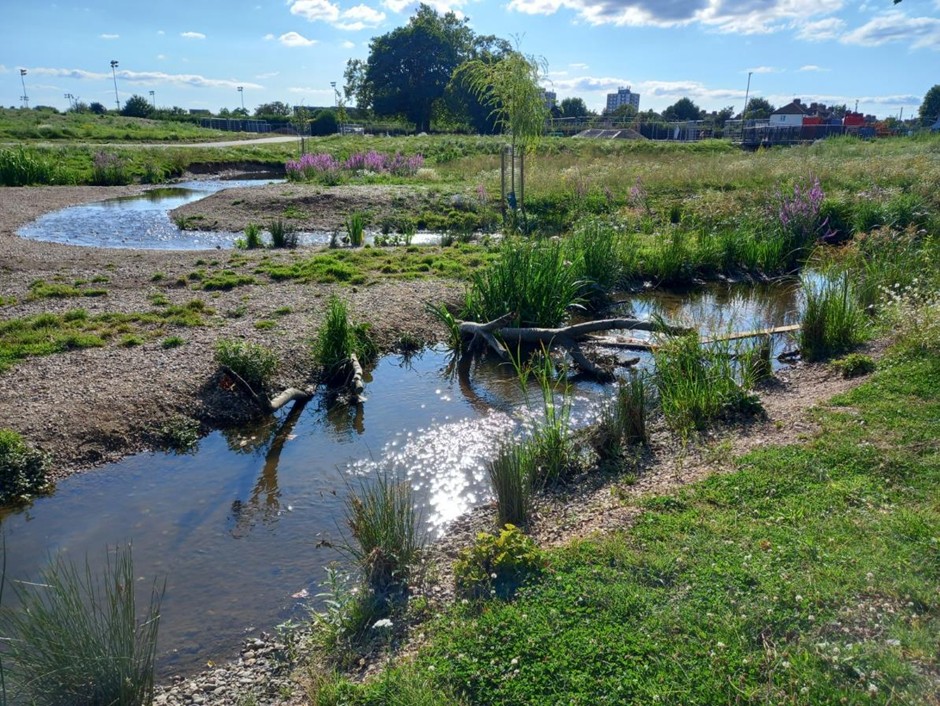
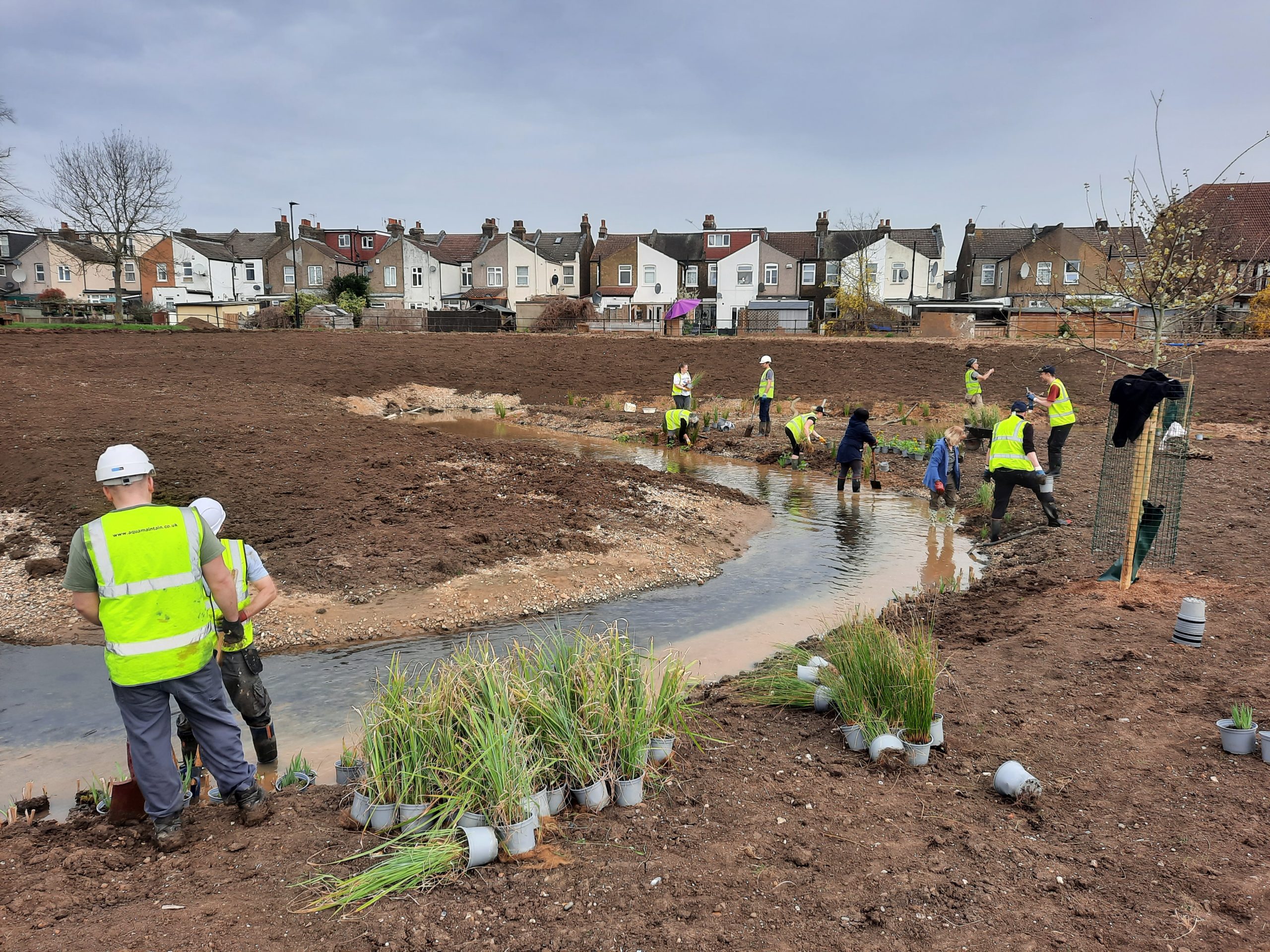
The two photographs below show the completed restoration of a section of the Turkey Brook in Albany Park, North London, creating better access to nature while also strengthening flood protection for nearby homes.
FLOODING ADVICE AND POLLUTION REPORTING
If you notice anything unusual in the water, whether it’s a strange smell, colour, or substance, please report it as suspected pollution to:
The Environment Agency (EA): Call their 24-hour hotline at 0800 80 70 60.
Thames Water: Visit their webpage to report pollution online: www.thameswater.co.uk/help/water-and-waste-help/pollution
The more reports and evidence we gather, the better we can work together to prevent future incidents. Thank you for your help!
THE RAVENSBOURNE CATCHMENT PARTNERSHIP
A key aspect of this project is the partnership work through the Ravensbourne Catchment Improvement Group (RCIG). This formed in 2012 in order to represent a wide range of local stakeholders with a shared interest in improving the whole Ravensbourne catchment system to benefit local people and riverine habitats. The Ravensbourne catchment refers to the area of land where rainfall drains into the River Ravensbourne and its tributaries.
Formed as part of the UK Government’s Catchment-Based Approach initiative, catchment partnerships help implement obligations for protecting and improving water environments under the Water Framework Directive .
The RCIG hosts a wide range of partners such as the Environment Agency, Thames Water, Bromley Council, Bromley Town Parks and Gardens and other community groups. This partnership working is crucial to the success of local projects and ensures that all stakeholders are onboard with opportunities to improve river habitat throughout the catchment.
WFD Info: https://environment.data.gov.uk/catchment-planning/WaterBody/GB106039023260
We would like to thank our partners for all their support.