Restore the capital’s network of rivers through the power of nature
We work to clean and green the capital’s 400-mile network of rivers through innovative solutions to boost biodiversity and restore nature.
The charity embeds nature-based solutions into every project, such as creating wetlands, reedbeds, and rain gardens that filter runoff and trap pollutants before they enter waterways. These green infrastructures mimic healthy headwater systems and act as living filters – intercepting sediments and nutrient pollution from surface water, slowing water flow during storms, and providing habitat for birds, amphibians, and pollinators. Thames21 also integrates sustainable urban drainage systems (SuDS) in urban settings to intercept and manage rainfall at source, reducing pressure on combined sewer overflows and improving water quality before water reaches the river network.
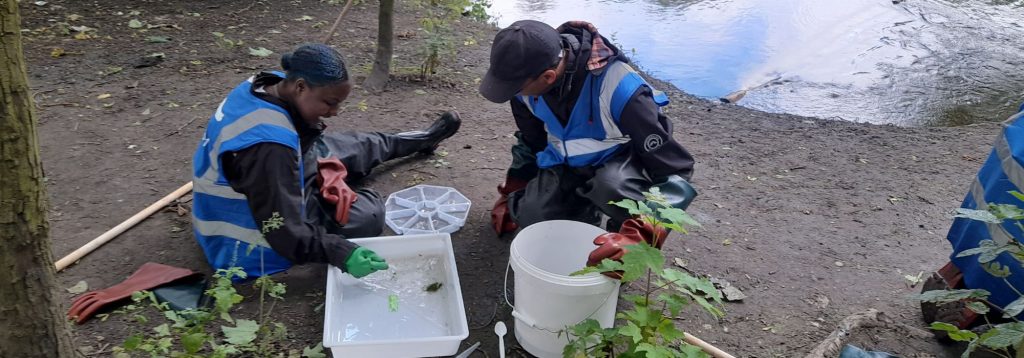
Community engagement is central to Thames21’s mission. Each year, thousands of volunteers take part in river clean-ups, invasive species control, riverbank planting days and citizen science initiatives. Through training programmes and partnerships with schools, businesses and local groups, Thames21 empowers local people to become long-term stewards of their waterways. Citizen scientists monitor water quality and river health, generating valuable data that informs restoration priorities and strengthens advocacy for better environmental practices across the Thames Basin.
Case Studies
Restoring rivers with the community in Lewisham
Restoring rivers with the community in Lewisham
Introduction
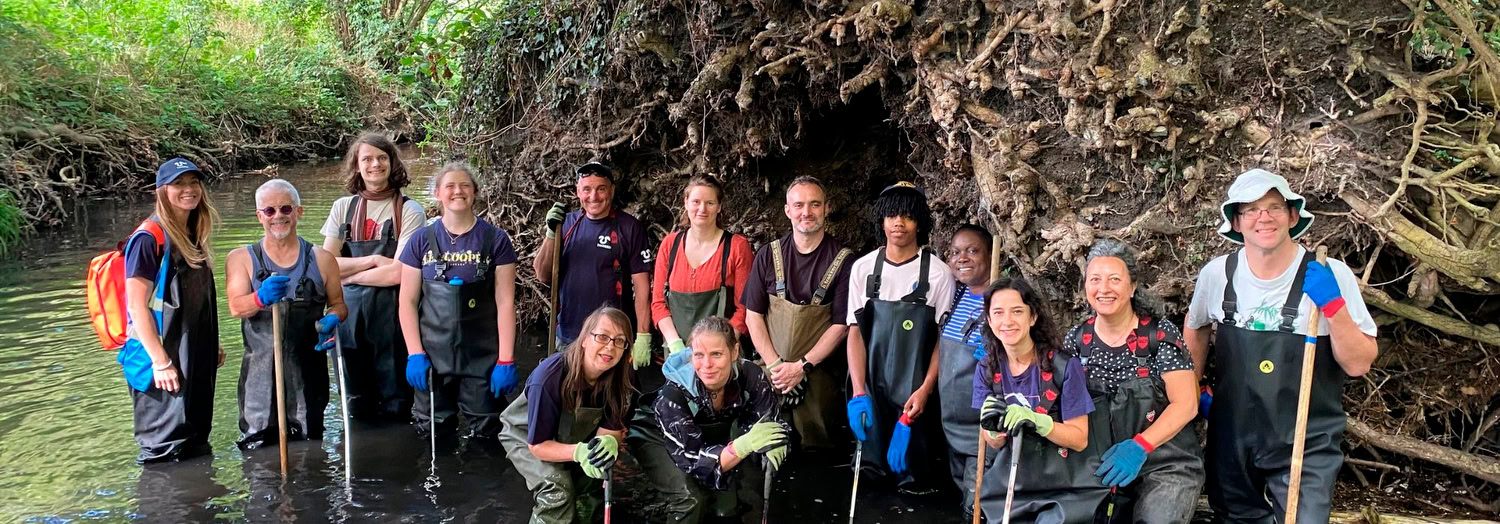
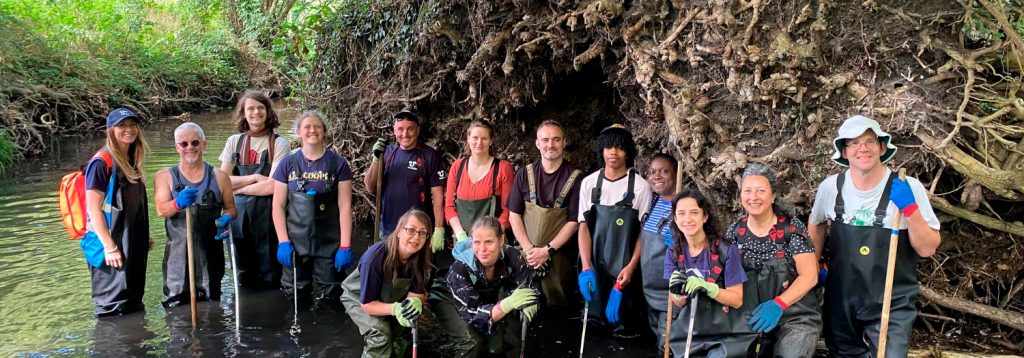
Between 2021 and 2024, Thames21 led a community-focused river restoration at Beckenham Place Park. More than 140 volunteers took part in hands-on activities that improved river health, boosted biodiversity, and strengthened local stewardship. The project successfully combined nature-based solutions with meaningful public engagement and wider digital participation.
The challenge
The River Ravensbourne at Beckenham Place Park faced common urban river pressures, including erosion, invasive species, low biodiversity, and limited public connection. While the park was well used, many visitors felt disconnected from the river itself, and changes to the landscape risked misunderstanding or resistance without strong community involvement.
The solution
Thames21 placed community involvement at the heart of the restoration. Local residents volunteered alongside staff and contractors, contributing more than 560 hours across 22 events. Practical activities such as installing natural river features and managing vegetation improved habitats while helping people understand how rivers work. Early engagement and clear communication ensured restoration balanced environmental protection with public access, supported by digital tools to widen participation.
Why it matters
The project shows how river restoration can deliver social as well as environmental benefits. By involving people directly, it built skills, confidence, and long-term stewardship, turning the Ravensbourne into a shared community asset. This approach strengthens support for nature recovery and demonstrates how inclusive, nature-based projects can bring people and places closer together.
Biodiversity boost in Bromley
Introduction
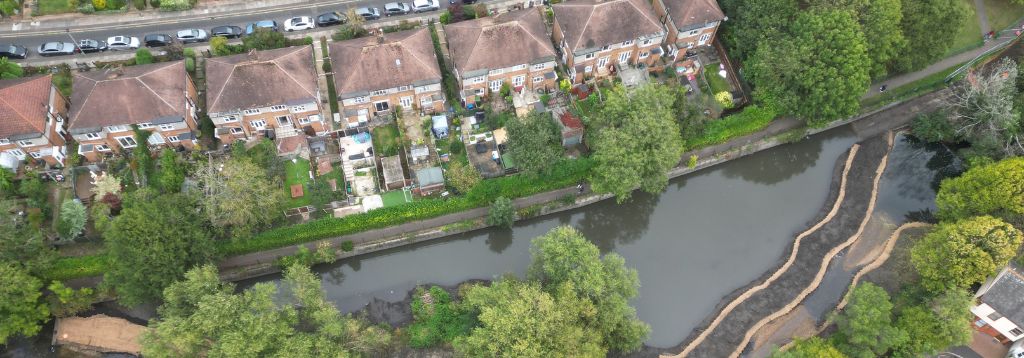
A major river restoration project in Bromley has successfully improved waterways for fish and wildlife by separating Glassmill Pond from the River Ravensbourne. Led by Thames21 alongside local partners, the scheme aimed to restore more natural river processes while enhancing biodiversity and reducing flood risk.
The Challenge
Although the river and pond were originally separate, they were connected in 1955 when the river was diverted to flow through the pond. While this initially seemed beneficial, the change created long-term environmental issues. These included increased flood risk, excessive silt build-up, and barriers that made it difficult for fish and other wildlife to move freely through the water system. Over time, these problems reduced water quality and limited the ecological health of both the river and the pond.
Why It Matters
By separating the two water bodies once again, the project restores a more natural balance. The river can now flow freely, carrying sediment downstream instead of depositing it in the pond, helping maintain water depth and quality. New features such as gravel beds and a pool-riffle sequence improve fish passage and create better habitats for spawning and shelter.
Beyond ecological benefits, the improvements also reduce flood risk and enhance the area as a green space for the local community. The project supports broader environmental goals, including biodiversity recovery and long-term river restoration, ensuring that this historic waterway can be enjoyed by both wildlife and residents for years to come.
People powered data
Introduction
An extensive river monitoring project has significantly enhanced the ability to inform regional and national policy, while increasing broad-scale river data access. This improves understanding and management of the state of rivers across England and Wales. Over a comprehensive three-year initiative, Thames21 completed the first national, standardised catchment framework integrating robust citizen science methodologies, tiered monitoring, and structured data management. The project aimed to build trust, transparency, data sharing, and collaboration across the Brent and London Lea River Catchment areas, providing better information for stakeholders and supporting more informed decision-making.
The Challenge
River management in England faces fragmented data collection, inconsistent monitoring methods, and limited public engagement. Stakeholders such as regulators, utilities, and communities often lack timely, accessible, and reliable data to respond to pollution incidents or chronic water quality issues. Without a standardised approach, it was challenging to integrate citizen science contributions into formal decision-making processes or to provide a clear national picture of river health.
Why It Matters
This project has enabled Thames21 to define clear recommendations for policy partners, ensuring the continued integration, development, and funding of critical river monitoring initiatives. By combining citizen science, collaborative governance, and national data systems, it strengthens transparency, builds trust, and allows for faster, evidence-based decision-making. Ultimately, it paves the way for healthier rivers and more resilient catchment management across England and Wales.